Home / Case study
Case study · SD Preserve and SD Review
Four body-camera clips, one clock: a compiled agency release, preserved and produced.
U.S. Customs and Border Protection published a 24-minute video of an April 2, 2023 incident near Las Cruces, New Mexico: title cards, maps and clips from Border Patrol agents’ Axon Body 3 cameras, spliced into one file. We ran it through SurveillanceDiscovery end to end, the way we would for a client.
Why a compiled video is hard
Agency releases, body-camera exports and claimant compilations rarely arrive as one recording. This one cuts between cameras, adds title cards, maps and crossfades, and its burned-in timestamps jump from clip to clip. Treat it as one recording with one start time and every moment after the first cut is placed wrong. The cameras also stamp -0400 although the incident was in Mountain time, so the clock you read on screen is not the local time of the event.
What we did
From one spliced file to a Bates-numbered production.
STEP 01
Preserve the original
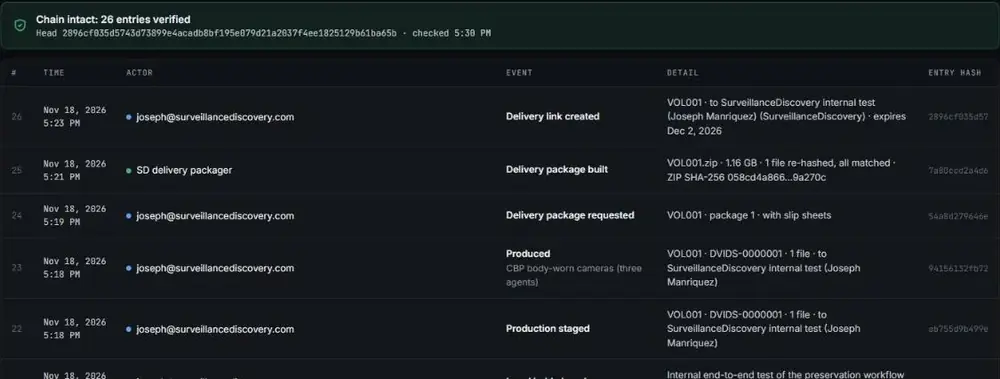
The release came in through a secure custodian link and was fingerprinted (SHA-256) as it uploaded, re-checked on arrival and sealed write-once (Amazon S3 Object Lock) under legal hold. Reviewers work from a review copy; the original is never touched.
STEP 02
Put each camera back on its own clock
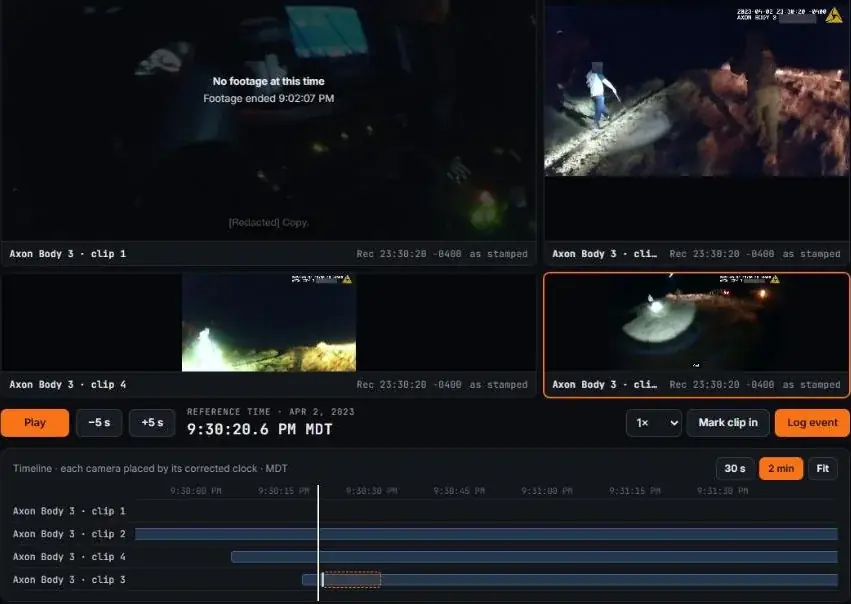
We marked each camera clip in the file to the frame and left the title cards, maps and crossfades off the timeline. Each clip keeps its own burned-in clock, entered to the millisecond and checked at the frames where the seconds change: three per clip, twelve in all, every one within 0.06 seconds.
On the timeline three cameras overlap from 23:30:18 (as stamped), shown in the matter’s local time. Events and clips are logged against that clock and the camera they came from, and each one goes into custody.
STEP 03
Cut a frame-exact exhibit from the original
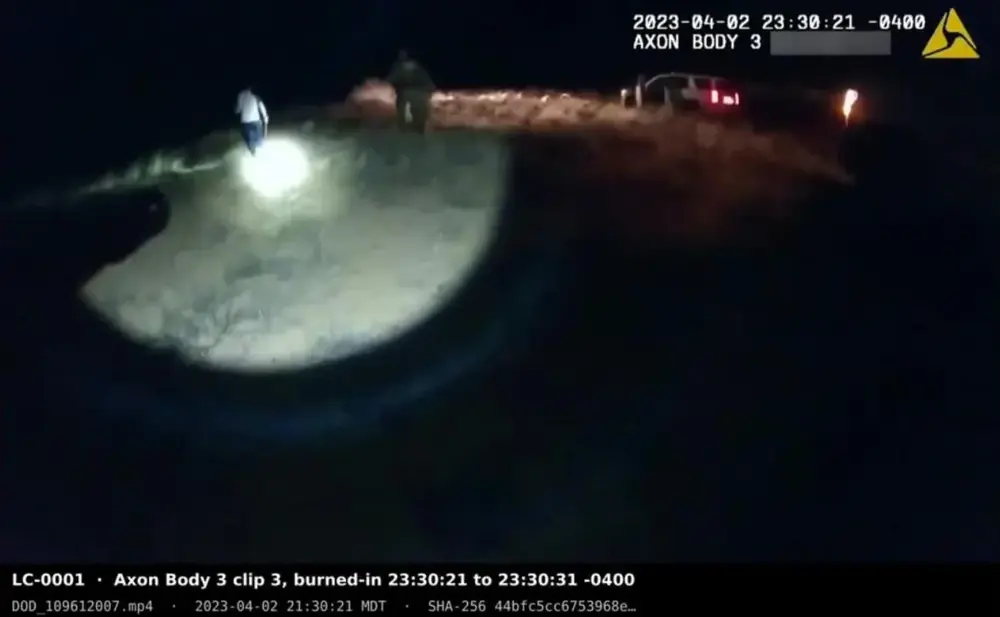
The snippet is cut from the original in our AWS environment, not from the review copy: 10.0 seconds, exactly 300 frames, with the exhibit number, source file, local time and SHA-256 printed under the picture. A native cut in the original streams is kept beside it.
STEP 04
Produce and deliver
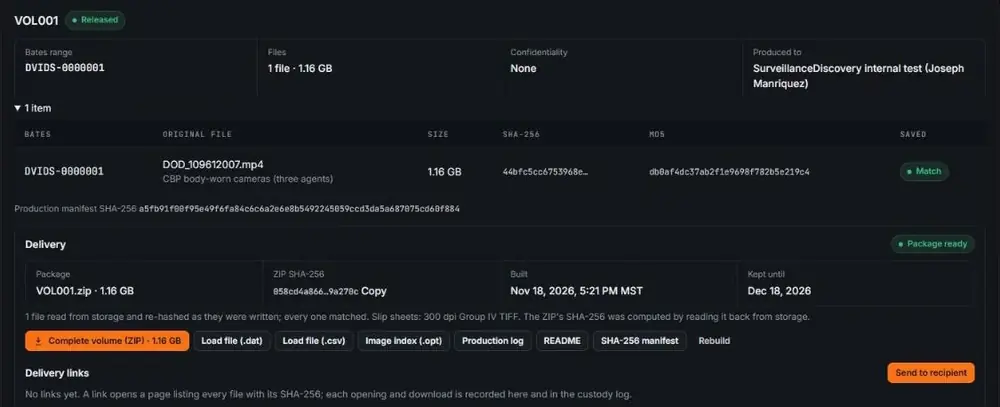
The file was staged as a Bates-numbered volume and re-fingerprinted when it was released; it matched. The delivery ZIP was built in AWS in under a minute: natives named by Bates number, load files for Everlaw and RelativityOne, slip sheets, an image index, the production log, a custody extract and a SHA-256 manifest, sent with a tracked link.
What it means for your matters
Compiled and exported video is how evidence usually shows up: an agency release, an Evidence.com export, a claimant’s edited clip, a fleet’s dashcam download. SurveillanceDiscovery preserves the native first, then makes it reviewable against every other camera on one clock, and produces it in the format your review platform loads, with the custody record to defend each step.
Source footage: U.S. Customs and Border Protection public release (DVIDS 881873). The redactions in the footage are CBP’s own. This was an internal run; no client data is shown.
Talk to an expert
Footage on a loop? Talk to a video evidence expert today.
Tell us where the cameras are. We will tell you what to preserve, how to collect it and how fast it needs to happen.